TAWARIKH TALKS

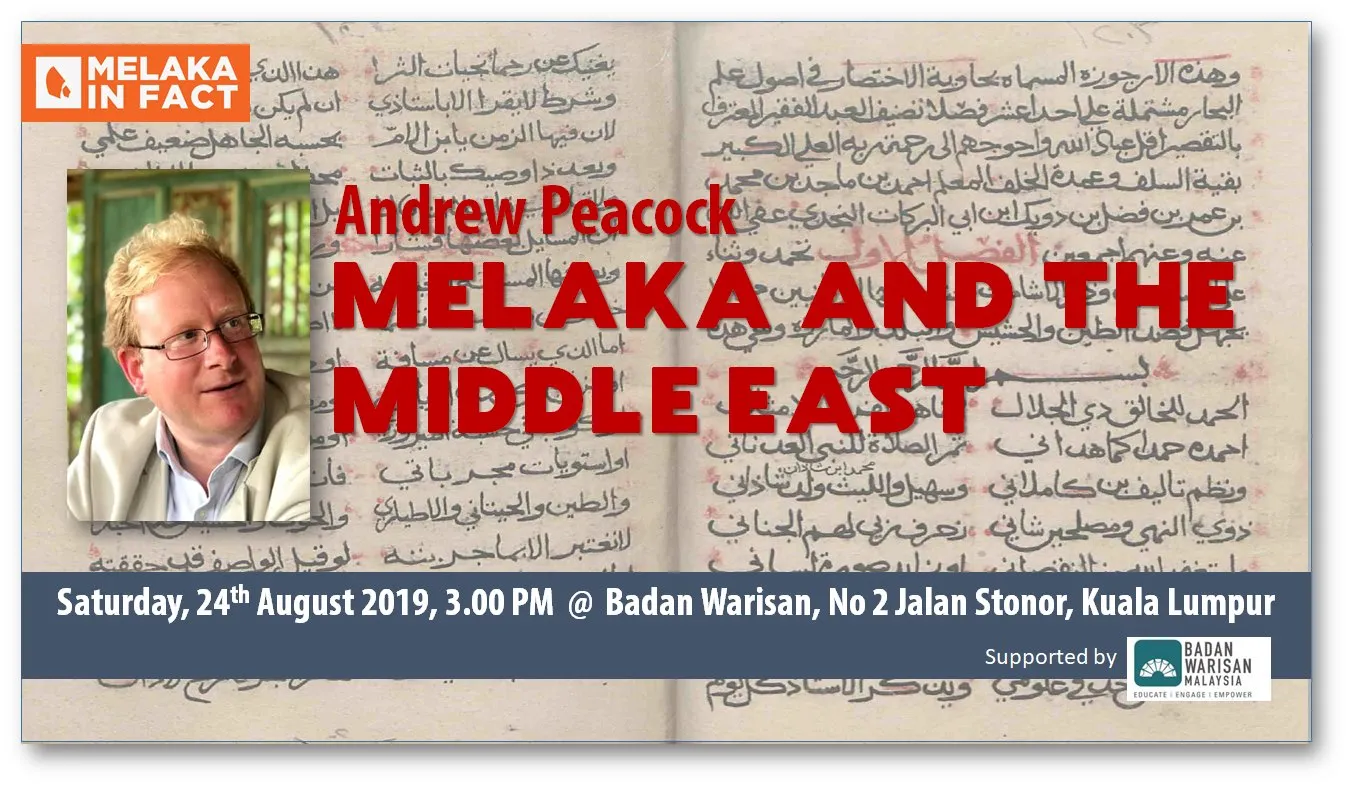
Melaka and the Middle East

Andrew Peacock

University of St Andrews

LET'S RIDE WITH US TO THE SECRET ISLAND!

Prof. Andrew Peacock

University of St Andrews Scotland, United Kingdom

Video by Andrew Peacock:
Tawarikh Talks are a series of public talks by distinguished scholars on Melaka’s early history.

ABOUT THE TALK

Dr Peacock examined Melaka’s links with the Middle East through Arabic navigational texts, Arabic inscriptions from Melaka itself, Persian geographical texts, and Turkish chronicles and administrative documents.

Links between the Middle East and Southeast Asia long predate both the foundation of Melaka and indeed Islam. Due to strong demand from the Abbasid Caliphate, navigational trade routes between the Middle East and Southeast Asia through the Indian Ocean were recorded, of which the most detailed is the al-Masalik wa’l-Mamalik by Ibn Khurdadhbih (846-7).

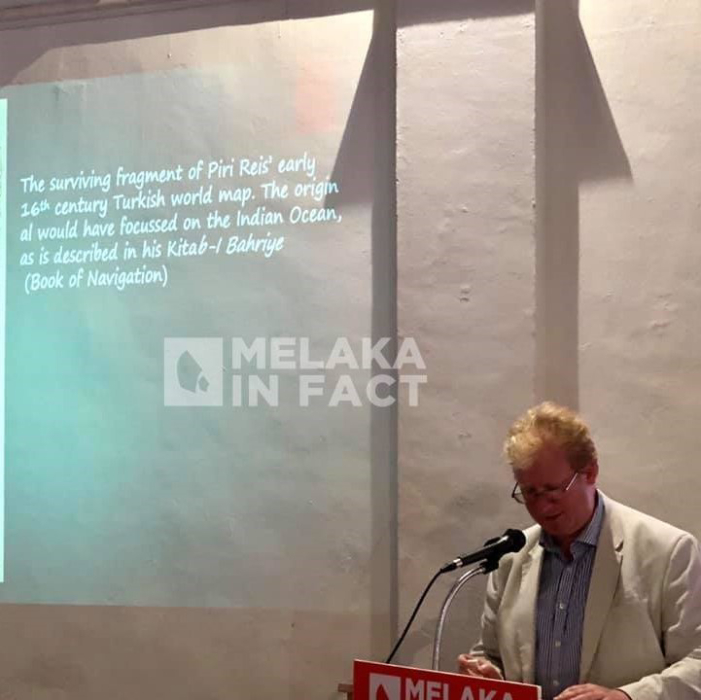
The most detailed references to Melaka are in Arabic navigational manuals created during the late fifteenth century and early sixteenth century by two South Arabian navigators, Ahmad b. Majid (1421-c.1500) and Sulayman al-Mahri (1480-1550). Ibn Majid’s poem (urjuza) al-Ma’laqiyya (which title refers to Melaka) describes both the route and the port, in verse. The use of Malay words, such as ‘tukang’, in Ibn Majid’s work, suggests Middle Eastern ships may have used a local pilot to guide them through the Melaka Straits. References to Melaka are also found in Sulayman al-Mahri’s al-‘Umda al-Mahriyya fi’l-‘ulum al-Bahriyya.

Passing references in the Arabic and Persian historical and geographical sources also indicate an awareness of Melaka in the fifteenth century, but more important are the documentary materials, in particular a long letter in Persian composed shortly after its conquest by the Portuguese which offers a detailed, firsthand account of the fall of the city.

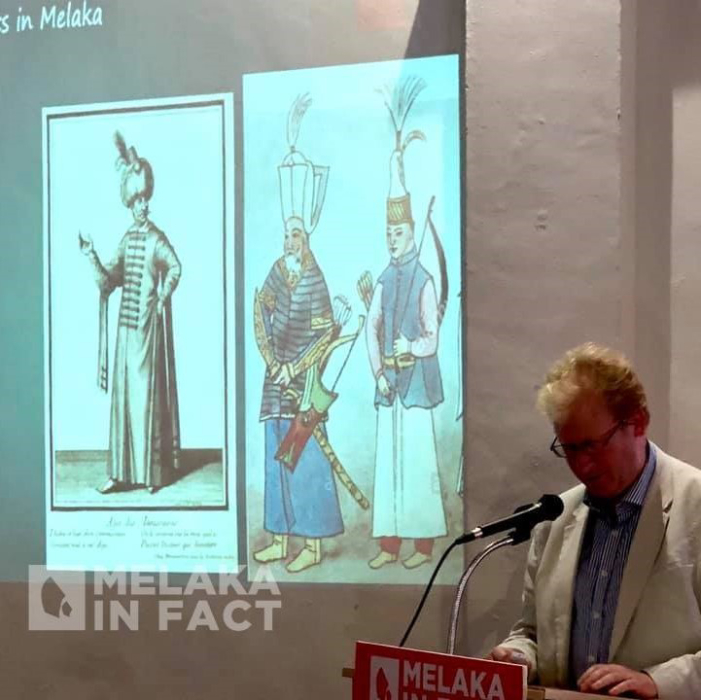
In Ottoman Turkish sources, Melaka is mentioned in navigational texts, references in the archival record, and references to the fall of Melaka in a little known chronicle by Kutahyali Firaki, the Seadetname, composed around 1527. Although the Turkish references lightly postdate the fall of Melaka, they indicate the impression that it made on the broader Muslim world as far west as Istanbul, and reflect memories of Melaka’s significance as a Muslim entrepot.

ABOUT THE SPEAKER

Dr Andrew Peacock is Bishop Wardlaw Professor of Islamic History at the University of St Andrews, UK. He studied Oriental Studies at the Universities of Oxford and Cambridge, and has held positions in Cambridge, Ankara, and as Visiting Professor in the Department of History, University of Malaya (2017-2018). He works on medieval and early modern Islamic history and the history of the Indian Ocean region, and specialises in Islamic manuscripts.

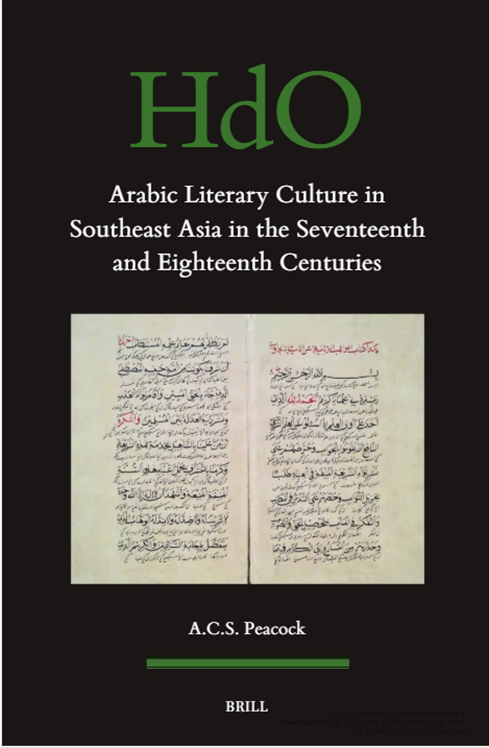
His publications relevant to Southeast Asia include (coedited with Annabel Gallop), From Anatolia to Aceh: Ottomans, Turks and South East Asia (Oxford University Press, 2015) and ‘Arabic Manuscripts from Buton, Southeast Sulawesi, and the Literary Activities of Sultan Muhammad ‘Aydarus’ in Journal of Islamic Manuscripts 10 (2019). More recently, he is the author of Arabic Literary Culture in Southeast Asia in the Seventeenth and Eighteenth Centuries (Brill, 2024).

HdO - Arabic Literary Culture in Southeast Asia in the Seventeenth and Eighteenth Centuries

Updated in February 2025

No Transcript

RELATED LINKS

Melaka in the Arabic, Persian and Turkish Sources

INTERVIEWS WITH DR ANDREW PEACOCK

MENJEJAK SEJARAH MELAKA DI TURKI

THE CRITICAL PERSIAN LETTER OF 1519

PHOTO GALLERY

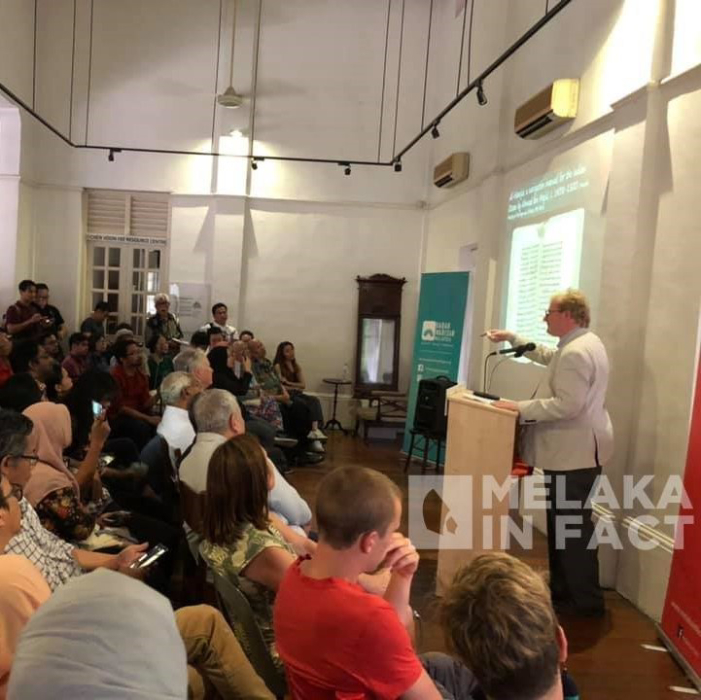
Gallery of Andrew Peacock:
Click on image to enlarge.